Design that aligns
brand, users, and
business goals.
Great design is not how it looks — it's how it works. We create consistent, intuitive digital experiences across websites, landing pages, apps, and navigation systems. Strategy first. Visual second. Always grounded in how your users actually think and move.
Most design problems
are really strategy problems.
A website that looks beautiful but confuses visitors is a failure. An app that wins design awards but loses users after day 3 is a failure. Good-looking design without strategic intent is expensive decoration.
The problems most businesses bring us aren't visual — they're structural. Navigation that buries what users want. CTAs that don't say what users need to hear. Layouts that look fine on a desktop and break on mobile. Brand elements that don't carry across the app, the website, and the email. Personas that were never defined, so the design serves no one in particular.
We fix those problems before they become expensive. Design strategy costs a fraction of a redesign.
UI is what they see.
UX is what they feel.
UI (User Interface) is the visual layer — the colors, typography, buttons, spacing, and components that make up every screen. It's the craft of making a product look right and feel polished.
UX (User Experience) is the structural layer — how the interface is organized, how users move through it, what they understand at each step, and whether they complete the actions your business needs them to complete. It's the strategy behind the craft.
Both matter. And at Virgo Development, both are grounded in the same thing: a deep understanding of who your users are and what your business needs to happen when they show up.
Crucially — because our design and engineering teams work together — what we design gets built exactly as intended. No approximation. No translation errors. No gap between the Figma file and the live product.
The four layers of a great digital experience
Strategy-led design across
every digital touchpoint.
We don't design in isolation. Every engagement starts with understanding your users, your business goals, and the context in which the product will be used. Design follows strategy — not the other way around.
Persona & Audience Strategy
Define who your users are — their goals, frustrations, decision-making patterns, and the language they use. Personas give every design decision a human reference point that makes the output better.
Brand, Style & Logo Systems
Brand guides, color systems, typography scales, logo usage rules, iconography, and component libraries — the reference system that keeps your visual identity consistent across every surface.
Website & Landing Page Design
High-fidelity website and landing page design with conversion-optimized layout, clear navigation hierarchy, and mobile-first responsive execution. Designed to perform, not just to impress.
Web & Mobile App UX/UI
End-to-end app design — user flows, wireframes, high-fidelity screens, interactive prototypes, and production-ready Figma handoff to the engineering team that builds it. No translation gap.
Design Systems & Component Libraries
Reusable UI component systems in Figma and code — buttons, forms, cards, navigation, modals — that keep your product visually consistent and dramatically accelerate future development.
UX Audit & Conversion Optimization
A structured review of an existing digital product — navigation clarity, CTA effectiveness, mobile experience, information hierarchy, and conversion bottlenecks — with a prioritized action plan.
AI accelerates.
Humans ensure it actually works.
AI design tools can generate layout options, explore visual directions, and speed up production tasks significantly. We use them where they help. But AI cannot understand your specific audience, your brand nuance, your accessibility requirements, or the real-world tradeoffs behind product decisions — without human expertise driving those decisions.
The risk of AI-only design is not bad pixels — it's design that looks right and doesn't work. Generic layouts that don't convert. Flows that seemed logical to an AI but confuse the actual user. Brand output that is technically competent and strategically empty.
Faster concept exploration
AI can generate 20 layout variations in the time it takes to sketch 2. We use that speed for rapid concept exploration — getting more options on the table, faster, for human evaluation.
Audience and brand validation
AI doesn't know your users' actual behaviors, your brand's specific voice, or the business logic behind each design decision. Human strategists validate whether AI output actually works in context.
AI-assisted consulting with human oversight
We can consult on AI-assisted design workflows — accelerating production without sacrificing quality — keeping speed high and ensuring every output meets the bar for your audience and brand.
Strategy before screens.
Always.
Every design engagement at Virgo Development follows the same structure: understand the audience and goals before opening a design tool. The quality of what you build in design is determined entirely by the quality of what you understand before you build it.
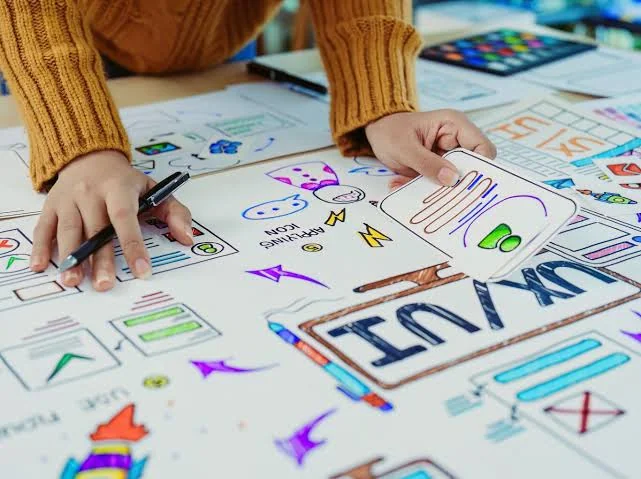
Persona, Audience & Goals
Define who the users are, what they need to do, and what the business needs to happen. This becomes the reference point for every downstream design decision.
Information Architecture & Navigation
Map the structure — how content is organized, how users move through the product, and where the key actions live in relation to where users naturally look.
Wireframes & User Flow Validation
Low- and mid-fidelity wireframes built on the architecture. Flow testing with real users or stakeholders before any visual polish is applied. Fix problems here, not in production.
High-Fidelity UI & Brand Application
Full visual design — color, typography, components, motion guidelines, and responsive behavior — applied to the validated wireframe structure. Production-ready Figma.
500+ projects.
Cross-industry.
No spec-to-code gap.
Over 21 years and 500+ projects, we've designed for aviation, eCommerce, education, healthcare, SaaS, and local services. The design work covers the full range — brand systems, landing pages, web apps, mobile apps, admin interfaces, and marketing pages.
The single most important thing we offer in design is the direct path to production. Our designers and engineers work as one team. What you approve in the design phase is what gets built. No translation. No approximation. No redesign because the layout was impractical in code.
UI/UX Design services are billed at $130/hour, with most projects scoped at a fixed engagement price following the Discovery Session.
Common questions about
UI/UX design.
What does a UI/UX design partner do?
A UI/UX partner connects user needs, brand identity, and business goals into one usable digital experience. At Virgo Development, that means persona strategy, information architecture, visual design, and a direct handoff to the engineering team that builds it — no translation gap between design and code.
Why does UX matter for small and mid-sized businesses?
Strong UX reduces friction, builds trust, and helps users complete the actions your business needs them to complete. Companies in the top quartile for design significantly outperform industry benchmarks in revenue. For SMBs, good UX is often the difference between a website that generates leads and one that gets forgotten after one visit.
How do brand guidelines improve UX?
Brand guidelines create consistency across every touchpoint. Consistent design builds trust, reduces cognitive load, and makes a business memorable. When users encounter the same colors, fonts, and tone across a website, app, and email, they recognize a professional and reliable organization — which directly affects conversion and retention.
What is AI-assisted design and when should it be used?
AI design tools accelerate layout exploration and production tasks. They are useful when speed and volume of decisions is high. However, AI cannot understand audience nuance, brand context, or real product tradeoffs without human guidance. We use AI to accelerate design workflows while maintaining human oversight at every strategic decision point.
How do personas improve UX design?
Personas give design decisions a specific human reference point. Instead of designing for everyone, the team designs for a person with known goals, frustrations, and behaviors. That specificity leads to better navigation structure, clearer calls to action, and less rework after launch. We build personas before wireframes, before visual design, and before any code is written.
Why should design and engineering come from the same team?
The most common failure point in design is the handoff — designs that look perfect in Figma but are impractical to implement correctly in code. When design and engineering are on the same team, designers understand what is buildable and engineers understand what was intended. The result is faster delivery and designs that work in production exactly as designed.
Start with a free
Design Consultation.
Tell us about your product, your users, and the problem you're trying to solve. We'll give you an honest assessment of where the design gaps are and what it would take to close them.
- ✓ Honest UX and brand audit — no fluff
- ✓ Persona and audience strategy direction
- ✓ Written scope and engagement estimate
- ✓ Zero cost. Zero obligation.